
Introducing Elast-a-Dapt™ Technology
For years, the fitness industry has been selling you the same lie dressed in different paint jobs. "Adaptive resistance." "Smart cables." "Intelligent loading." Different logos. Same flat, lifeless pull. Same predictable curve. Same machine your gym bought three iterations ago and slapped a new sticker on.
We were tired of it. So we built something else.
Elast-a-Dapt™ Technology is the first system to fuse engineered elastic banding with true adaptive resistance — and the result isn't an upgrade. It's a different category of feel entirely.
What It Actually Does to Your Lift
Pick up a dumbbell. The weight is the weight. Pull a cable stack. The load is constant — and your nervous system figured that out years ago.
Now imagine a resistance curve that fights back differently at every inch of the rep. A bottom end that loads explosively. A mid-range that locks your tension where strength coaches have been begging for it. A top end that doesn't let you cheat the lockout — because the system literally won't let you.
That's Elast-a-Dapt™. The elastic component layers a Variable Tension Profile over the adaptive base, creating a Hybrid Resistance Curve that conventional adaptive resistance technology physically cannot replicate. Not "don't." Cannot.
You will feel it on your first rep. Your training partners will feel it on your first set. Your plateaus will feel it by the end of week two.
Engineered. Measured. Proven.
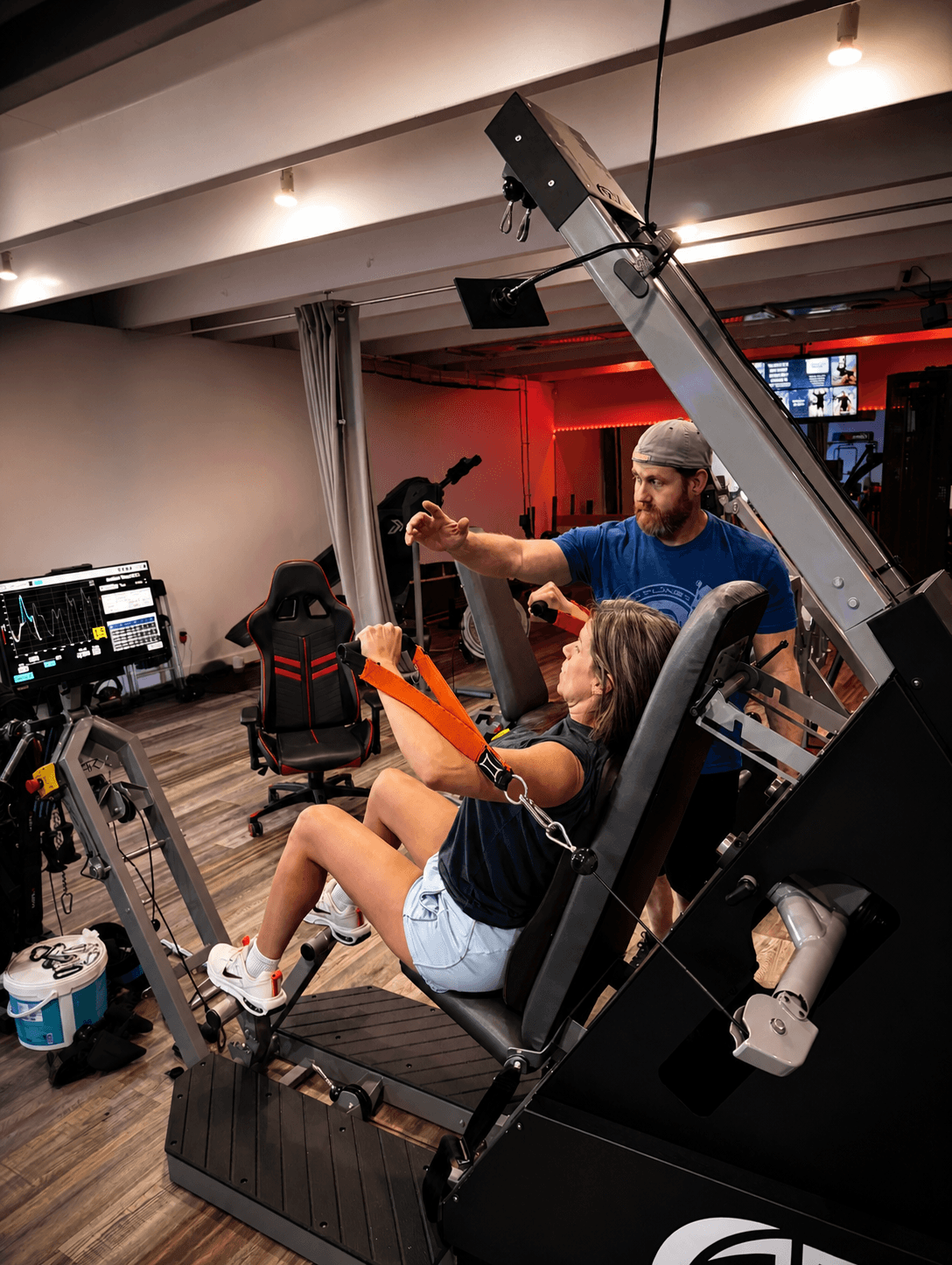
Look closely at the image above. That's not stock photography. That's an athlete training on a live Elast-a-Dapt™ system, with a certified coach reading real-time force curves off the data display.
Every rep is mapped. Every tension point is tracked. The bands aren't decoration — they're a calibrated component of a system engineered to deliver a specific resistance signature you can see on the screen and feel in the muscle.
This is what separates Elast-a-Dapt™ from anything else claiming to "use bands." Slapping resistance bands onto a cable machine is a hack. Engineering elastic tension into the adaptive load curve, calibrating it across the full range of motion, and validating it against live biomechanical data — that's a technology.
Why Nobody Else Is Doing This
Look around. You won't find this anywhere else. There's a reason for that.
Building a system that genuinely marries elastic banding to adaptive resistance — without it feeling gimmicky, without the bands fatiguing inconsistently, without the whole thing turning into a hardware nightmare — took us years of engineering, prototyping, and athlete testing. The geometry has to be right. The tension calibration has to be exact. The integration has to be seamless.
The Elast-a-Dapt™ name, the system, the methodology — they belong to us. And athletes who train on it know within one session that what they're feeling isn't something they can get from a competitor's catalog with a different sticker.
If you see another brand try to imitate it, you'll know. Because it won't feel like this.
What This Means for Your Training
- Strength curves that match human biomechanics instead of fighting them
- Time under tension that finally stays where you want it
- Explosive recruitment at ranges where standard cables go slack
- Stabilizer engagement that flat resistance simply cannot trigger
- A nervous system response that translates directly to athletic output
This isn't a gimmick. It isn't a feature. It's a fundamental rethink of what an adaptive machine should feel like under your hands.
The Machine You Train On Should Train You Back
Every other piece of equipment on the floor is a tool. Elast-a-Dapt™ is a training partner. It reads what you're doing and answers — across the entire rep, across the entire range, across every set.
The athletes who've trained on it don't go back. They can't. Once you've felt resistance that actually responds — that builds, releases, and reloads with intention — flat cable feels like training in slow motion.
The category just shifted.
Welcome to Elast-a-Dapt™. Everything else is just weight.